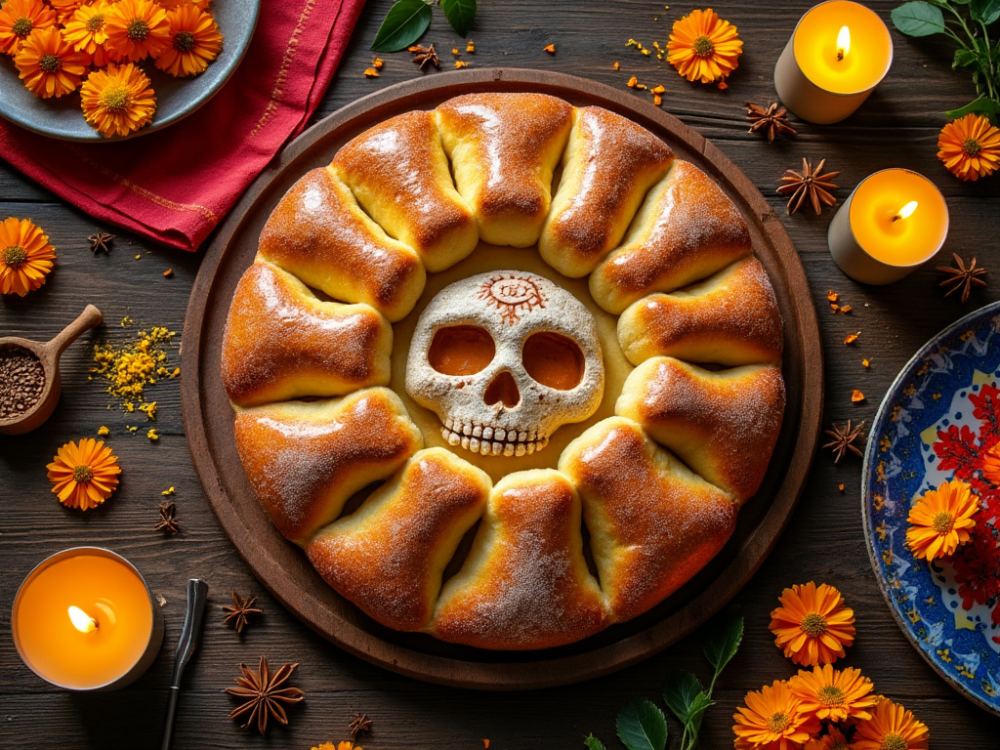
Pan de Muertos
Pan de Muertos, or Bread of the Dead, is a traditional Mexican sweet bread enjoyed during Día de los Muertos. This soft, aromatic loaf is flavored with hints of orange zest and anise, decorated with 'bones' on top, and finished with a light sugar glaze. Perfect for honoring loved ones, this recipe brings warmth and tradition to your Día de los Muertos celebration.
Equipment
- Mixing Bowls – for combining ingredients and allowing the dough to rise
- Measuring Cups and Spoons – to measure flour, sugar, milk, and spices accurately
- 1 Wooden Spoon or Dough Scraper – for mixing and handling the dough
- 1 Stand Mixer with Dough Hook (optional) – for easier kneading, especially if the dough is sticky
- 1 Whisk – to mix dry ingredients and aerate the flour
- 1 Zester or Microplane – to zest the orange for added flavor
- 1 Baking Sheet or Baking Pan – for baking the loaf or rolls
- Parchment Paper – to line the baking sheet for easy removal
- 1 Pastry Brush – to apply the glaze over the bread after baking
- Kitchen Towel or Plastic Wrap – to cover the dough while it rises
- 1 Cooling Rack – to cool the bread after baking without getting soggy
- 1 Sharp Knife or Bench Scraper – for dividing the dough and shaping the decorations
Ingredients
For the Dough:
- 4 cups All-purpose flour, plus extra for dusting
- ½ cup Granulated sugar
- 1 packet Packet (2¼ tsp) active dry yeast
- ½ cup Milk, warm (around 110°F)
- ½ cup Unsalted butter, softened
- 4 Large eggs, at room temperature
- Zest of 1 orange
- 1 tsp Salt
For the Glaze:
- ¼ cup Granulated sugar
- ¼ cup Orange juice (freshly squeezed for a bright, zesty flavor)
For Decoration:
- ¼ cup Granulated sugar, for sprinkling
- Tip: For a slightly more aromatic flavor, add a teaspoon of anise seeds to the dough.
Instructions
- Prepare the Yeast:In a small bowl, combine warm milk and yeast with a teaspoon of sugar. Let it sit for about 10 minutes, or until foamy. This step ensures the yeast is active and ready to make your bread rise.
- Make the Dough:In a large mixing bowl, whisk together the flour, sugar, and salt. Add the yeast mixture, softened butter, eggs, and orange zest. Mix with a wooden spoon until the dough begins to form.
- Knead the Dough:Transfer the dough onto a floured surface and knead for about 10 minutes, until smooth and elastic. Alternatively, use a stand mixer with a dough hook attachment for 5-7 minutes. The dough should be soft and slightly sticky but should pull away from the sides of the bowl.Tip: If your dough feels too sticky, sprinkle in a little more flour, one tablespoon at a time.
- First Rise:Place the dough in a greased bowl, cover it with a damp cloth, and let it rise in a warm place for about 1-2 hours, or until doubled in size.
- Shape the Dough:Once risen, punch down the dough to release any air. Separate about ⅓ of the dough and set aside. Shape the remaining dough into a round loaf and place it on a lined baking sheet.
- Decorate:With the reserved dough, roll out small sections to create “bone” shapes and place them on top of the round loaf to form a cross, symbolizing the bones of ancestors. You can also make a small ball to place at the center.
- Second Rise:Cover the shaped dough with a cloth and let it rise for another 45 minutes to an hour until it’s slightly puffed up.
- Bake the Bread:Preheat your oven to 350°F (175°C). Once preheated, bake the bread for 30-35 minutes, or until golden brown. You’ll know it’s done if it sounds hollow when tapped on the bottom.
- Add the Glaze:While the bread is still warm, brush it with the orange juice and sugar glaze, then sprinkle generously with sugar for that classic finish.Tip: Let the bread cool slightly before slicing to keep it from crumbling.
Notes
Storage and Freezing Tips
To keep your Pan de Muertos fresh and delicious, store it in an airtight container at room temperature for up to three days. If you want to enjoy it over a longer period, Pan de Muertos can be frozen. Simply wrap the loaf tightly in plastic wrap, then place it in a freezer-safe bag or container, and freeze for up to two months. When you’re ready to enjoy it again, thaw the bread at room temperature. For a freshly-baked taste, warm it in the oven at a low temperature for a few minutes, and enjoy it as if it were made that very day!Substitute Ingredients for Dietary Restrictions
If you or your loved ones have dietary restrictions, you can still enjoy the rich tradition of Pan de Muertos with a few simple ingredient swaps. For a dairy-free version, replace the butter with coconut oil or a dairy-free butter alternative, and use almond, oat, or soy milk in place of regular milk. If you're avoiding eggs, try using a “flax egg” substitute: mix one tablespoon of ground flaxseed with three tablespoons of water for each egg needed. For gluten-free Pan de Muertos, use a gluten-free all-purpose flour blend designed for baking. These substitutions allow everyone to enjoy the flavors and spirit of Día de los Muertos while respecting individual dietary needs.